Address
179 Itaewon-ro, Yongsan-gu, Seoul (04350)

Asian Society of Labour Law · Seoul
Law and Policy for the Future of Work in Asia: Vocational Education, Active Labor Market Policies, and Artificial Intelligence
Welcome
The 2026 Asian Society of Labour Law Conference takes place on 13–14 November 2026
at the Jeongsu Campus of Korea Polytechnics in Seoul.
Under the theme "Law and Policy for the Future of Work in Asia,"
it gathers labour-law scholars, practitioners, and students from across Asia
for keynotes, panels, and paper presentations.
Use the tabs above for the recommended hotel,
airport and venue transport, and places to visit in Seoul.
At a Glance
Date 13-14 November 2026 (Fri-Sat)
Venue Jeongsu Campus, Korea Polytechnics · 73 Bogwang-ro, Yongsan-gu, Seoul (04392)
View on Google Maps →
Host Korea Polytechnics & Asian Society of Labour Law
Organizer Asian Society of Labour Law
Support (TBD)
Language English
Key Dates
Registration & Contact
Contact asiansll@yahoo.com

Conference Program
Tentative program — subject to change. Session chairs to be confirmed (TBD).

Accommodation & Access
Accommodation
A four-star hotel in Itaewon, standing directly in front of Itaewon Station (Line 6). It is about 1 km from the conference venue, Korea Polytechnic's Seoul Jeongsu Campus — reachable on foot, by local bus, or by a short taxi ride. You are welcome to stay at any hotel of your choice; we recommend the Hamilton for its convenient location near the venue.
179 Itaewon-ro, Yongsan-gu, Seoul (04350)
4-star · 162 rooms
Line 6 Itaewon Stn — Exit 1 / 2, at the door
~1 km · 12–15 min walk / bus / 5-min taxi
Airport → Hotel
About 55 km · 1 hr 20 min
Route resumed service on 3 Sept 2026. Timetable: seoulairbus.com.
Hotel → Venue
Korea Polytechnic Ⅰ University, Seoul Jeongsu Campus · 73 Bogwang-ro, Yongsan-gu · about 1 km

Explore Seoul
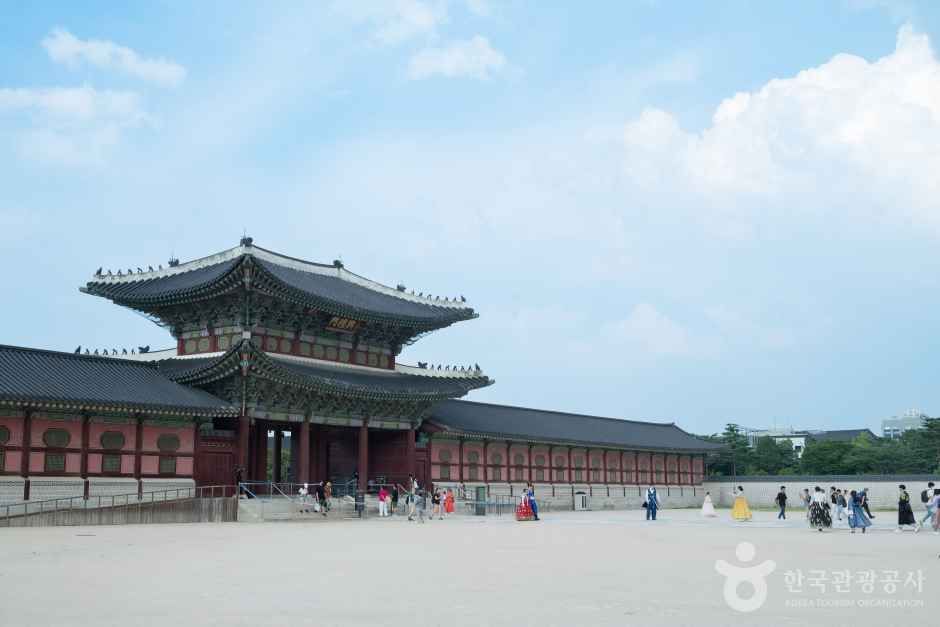
Built in 1395 by King Taejo, Gyeongbokgung was the first and largest of the Joseon dynasty's grand palaces — known as the "Northern Palace." Razed during the Imjin War (1592–1598) and later restored under King Gojong, it preserves the original Gyeonghoeru Pavilion and the Hyangwonjeong Pavilion and pond. The grounds also house the National Palace Museum and the National Folk Museum.

Built in 1405 as a secondary palace, Changdeokgung became a favored royal residence and is the best-preserved of Seoul's five grand palaces. It is especially prized for its naturalistic rear "Secret Garden" (Huwon), and was inscribed as a UNESCO World Heritage Site in 1997.
%20-%20Seoul%2C%20Korea.jpg?width=1200)
Jongmyo was the Joseon dynasty's principal royal ancestral shrine, enshrining the spirit tablets of past kings and queens and built alongside Gyeongbokgung under King Taejo. Its Jeongjeon hall — at 101 m, Korea's longest wooden building — anchors a UNESCO World Heritage Site that still hosts Jongmyo Jerye, an ancient royal memorial rite with music and dance.

Set between Gyeongbokgung, Changdeokgung and Jongmyo, Bukchon is a living neighborhood of hundreds of Joseon-era hanok houses. Many now serve as cultural centers, guesthouses, restaurants and tea houses — please keep your voice down, as residents still live here.
.jpg?width=1200)
Korea's first multipurpose tower, pairing a broadcasting mast with a sightseeing observatory, it has crowned Namsan as a Seoul icon for over 40 years with sweeping city views. Reached via the historic Namsan Cable Car (running since 1962), it's a favorite backdrop in countless K-dramas and variety shows.

Korea's flagship museum holds a vast collection spanning ancient to modern art and history, plus a Children's Museum and outdoor grounds of pagodas and stone works. It also runs research, education, concerts and international exchange programs — highlights include the Pensive Bodhisattva of the Room of Quiet Contemplation.
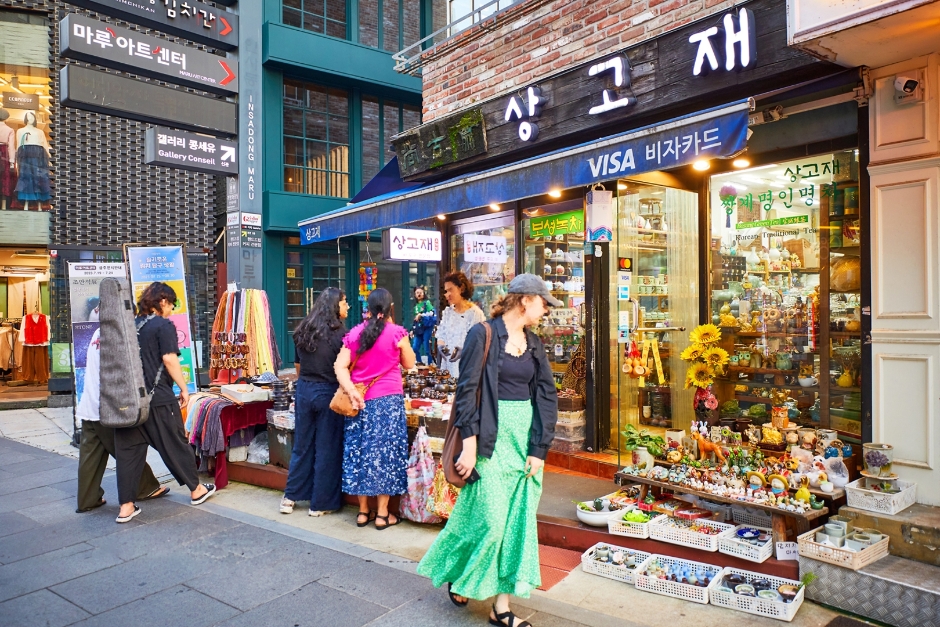
A lively pedestrian street packed with art galleries, traditional tea houses, restaurants and craft vendors — famously marked by Hangeul-only shop signs. Its wide, easy-to-walk lanes come alive on evenings and weekends with buskers and street performers.

One of Seoul's main shopping districts, lined with brand shops and major department stores — Lotte, Shinsegae, Migliore, Noon Square and M Plaza — for fashion, cosmetics and accessories. It's also packed with dining, from Korean pork cutlet and noodle-soup spots to Western and Japanese fare, plus salons, banks and theaters.
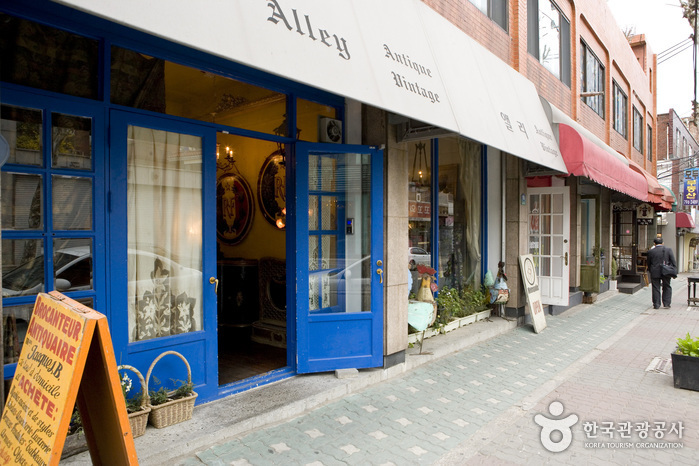
Seoul's most international quarter, long shaped by the nearby former garrison and home to the Seoul Central Mosque, global dining and nightlife along Itaewon-ro and Gyeongnidan-gil. Its landmark Antiques Street — a roughly 1-km strip of vintage furniture and decor dealers since the late 1960s — hosts the Itaewon Antique Festival each spring and autumn.

Zaha Hadid's flowing, futuristic landmark hosts exhibitions, fashion shows, forums and conferences across spaces like the DDP Design Museum and Dongdaemun History & Culture Park. Its name stands for "Dream, Design, Play," and its silver curves — spectacular after dark — are a favorite for photographers.

A former industrial zone of factories and handmade-shoe workshops along Yeonmujang-gil, reborn as a trendy district of warehouse-style cafés, select shops and restaurants set among still-working factories. Pioneered by the red-brick Daerim Changgo warehouse, it keeps adding new cafés, bakeries and cultural complexes.

A youthful, energetic neighborhood by Hongik University filled with fashion, cosmetics and lifestyle shops alongside distinctive cafés and restaurants — and near-constant busking and dance performances. Landmark spots include the artists' ateliers' street, "Picasso Street," and Club Street.
Text (descriptions, hours, fees) is sourced from Korea's public tourism data — the Korea Tourism Organization (한국관광공사 · TourAPI / VisitKorea), under the Korea Open Government License (공공누리). Official photos below are also from the KTO ("출처: 한국관광공사"); the remaining photos are from Wikimedia Commons contributors under Creative Commons (CC BY / CC BY-SA) or public domain.
Korea Tourism Organization (한국관광공사 · TourAPI)
National Museum of Korea
Wikimedia Commons